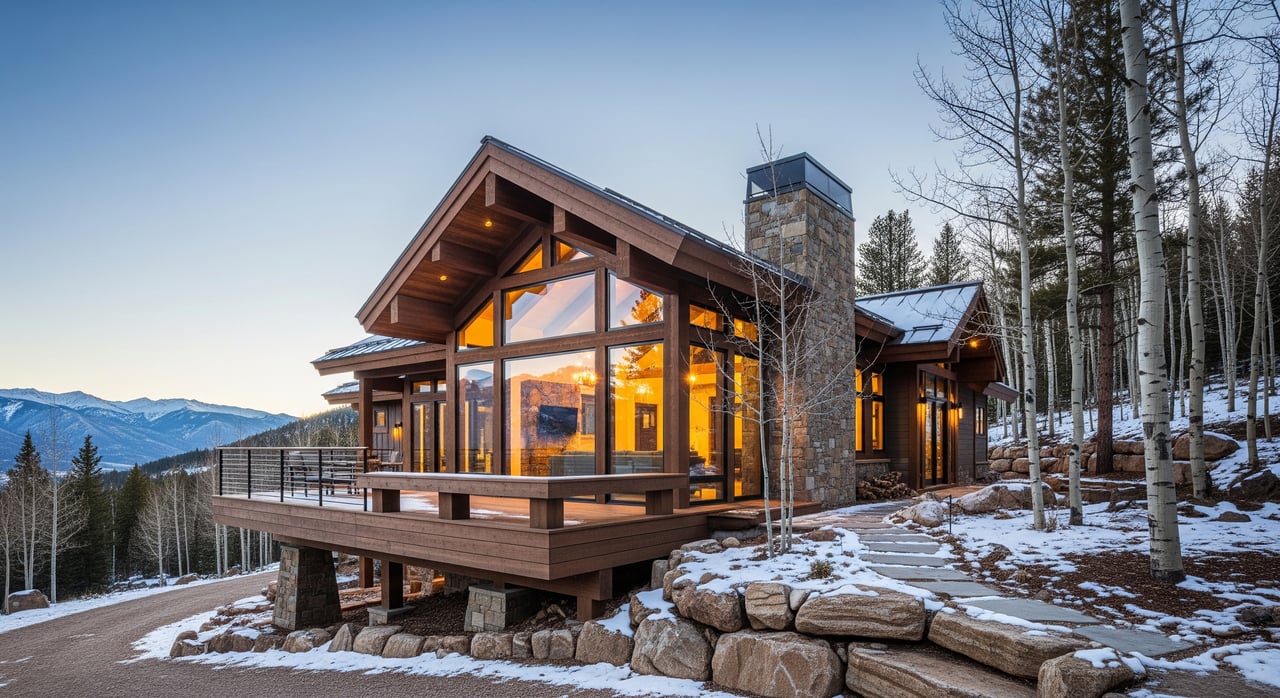
Dreaming of a cabin retreat near Woodland, but unsure how the financing works in a mountain market? You are not alone. Prices, property types, and rental plans all affect your down payment, loan type, and timeline. In this guide, you will learn the key differences between second-home and investor loans, what down payment to expect, how DSCR loans work, and what lenders look for with rustic cabins. Let’s dive in.
Start with your use plan
Before you price loans, decide how you will use the cabin. Lenders classify properties as a primary residence, a second home, or an investment. That classification drives your rate, down payment, and cash reserve needs.
- Second home: You and your family use it for personal stays. Many lenders expect a meaningful distance from your primary home and year-round livability.
- Investment property: You plan to rent it primarily for income, including frequent short-term rentals. This usually means higher down payments and reserves.
- Primary residence: You intend to live there most of the year. Some loan programs require primary occupancy.
Local rules matter. HOA restrictions and Summit County policies can limit short-term rentals. If rental use is frequent, many lenders will classify the loan as an investment even if you also stay there personally. The common 14-day rule is a tax concept, not a lending rule, so confirm how your lender defines rental thresholds.
Down payment basics in Summit County
Woodland sits in a high-demand mountain market near Kamas and Park City. Prices often trigger jumbo loans, and rustic features can increase scrutiny. Typical ranges you can expect:
- Second-home conventional: usually 10 to 20 percent down. Many buyers land at 20 percent if the property is unique or nonstandard.
- Investment property: commonly 15 to 25 percent down, often 20 to 25 percent for single-family rentals.
- Jumbo loans: often 20 percent or more down, sometimes 25 to 30 percent depending on profile and lender.
- Construction-to-perm: typically 20 to 25 percent of the completed value. Lot-only financing often needs 25 to 50 percent down.
Reserves are separate from your down payment. Plan for 2 to 6 months of housing expenses for second homes, 6 months or more for investment properties, and 6 to 12 months for many jumbo or portfolio loans. Lenders may require additional liquidity if you will qualify using rental income or if you are self-employed.
Loan options for Woodland cabins
Conventional second-home mortgages
If you plan to use the cabin personally, this can offer lower rates than investment loans. Underwriting focuses on your credit score, debt-to-income ratio, and reserves. Some lenders require the property to be suitable for year-round occupancy and located a set distance from your primary home.
Investment-property mortgages
If rentals are your main goal, the loan is treated as an investment. Down payments and rates are higher than second-home loans. Lenders can count rental income, but they adjust for vacancies and require documentation.
DSCR loans for investors
Debt Service Coverage Ratio loans qualify you based on the property’s cash flow rather than your personal income. DSCR equals net operating income divided by annual debt service. Many lenders want a DSCR above 1.0, often 1.0 to 1.25. Expect lower maximum loan-to-value, slightly higher rates, and conservative treatment of short-term rental income. Some products offer 30-year fixed or interest-only options.
Jumbo loans
When your loan amount exceeds the county conforming limit, you move into jumbo territory. These loans often require stronger credit, higher reserves, and larger down payments. Check current FHFA county loan limits for the exact threshold.
Construction and lot financing
Planning to build or take on a major rehab? Construction-to-permanent loans fund the build with interest-only draws, then convert to a permanent loan when complete. Lenders require approved plans, a budget, and a qualified builder. Raw land or unimproved lots are higher risk and generally need larger down payments with higher rates.
HELOC or cash-out from your primary home
If you have equity in your primary residence, a HELOC or cash-out refinance can provide funds for down payment or renovations. Be mindful of total leverage and reserve needs when using primary-home equity.
Portfolio and non-QM options
For nonstandard cabins, such as log builds with unique utilities or guest structures, portfolio lenders or non-QM products may fit. These can be more flexible on property features but often require larger down payments and reserves.
Property factors lenders review
Livability and condition
Lenders want to see a safely habitable cabin. Heat must function, the roof should be sound, and basic systems should be operational. Older cabins in disrepair may require repairs before closing or a rehab-style loan.
Utilities and access
Wells, septic systems, private roads, and seasonal access are common near Woodland. Expect requests for well and septic inspections, evidence of road maintenance, and proof of year-round access if you will occupy in winter months.
Appraisals in mountain markets
Comparable sales can be limited. Appraisers weigh access, condition, proximity to recreation, and road maintenance. Sparse comps can slow underwriting or reduce loan-to-value, so allow extra time for appraisals.
Insurance and hazard risk
Wildfire exposure, snow load, and other hazards can increase premiums or limit coverage. Lenders require hazard insurance, and flood insurance if the property is in a flood zone. If you plan to rent, confirm that your policy supports that use.
Short-term rental rules and financing
If you intend to rent the cabin frequently, your loan will likely be classified as an investment. That means higher down payments, rates, and reserves. Lenders also look at local rules and HOA restrictions when considering rental income. For underwriting, they may use a conservative share of gross rent or require platform statements and tax returns for proven performance.
Pre-approval timeline and checklist
Plan ahead, especially before peak ski or summer seasons when underwriting and appraisals can slow down.
- Conventional second home: conditional pre-approval in about 1 to 2 weeks once documents are ready. Typical closing is 30 to 45 days. Allow extra time for rural appraisals.
- DSCR or investor products: some can close in 21 to 45 days if documentation is organized. STR income verification can add time.
- Construction loans: expect 45 to 90 days to finalize plans, builder approval, and underwriting.
Have these documents ready:
- Recent pay stubs and the last two years of tax returns, or the lender’s required income documentation.
- Bank and investment statements, usually 2 to 3 months, with extra statements for reserves.
- List of assets and liabilities, plus your credit pulled by the lender.
- Documentation for other properties, leases, or rental platform statements if applicable.
- For land or builds, project plans, a cost breakdown, and builder information.
Start lender conversations at least 60 days before you plan to write offers. This gives time to resolve access, well or septic, and rental-policy questions that often arise in the Woodland area.
A simple path to closing
- Define your use case. Second home or investment determines loan type and down payment.
- Compare loan structures. Review conventional, jumbo, DSCR, and construction options side by side.
- Get pre-approved early. Aim for a strong pre-approval or proof of funds before touring.
- Screen properties for lender red flags. Ask about year-round access, wells, septics, and any deferred maintenance.
- Price insurance early. Get quotes that reflect wildfire and STR endorsements if needed.
- Plan for reserves. Target the higher end if you expect jumbo, STR, or portfolio underwriting.
- Build appraisal and closing buffers. Rural comps and winter conditions can slow timelines.
How Parker Properties, Inc. helps
You want the cabin, not the headaches. Parker Properties pairs local brokerage expertise with integrated property management and in-house maintenance and construction leadership. That means you can shop confidently, price renovation or upkeep early, and plan for rental operations if that is part of your strategy.
- Local search and valuation: We know Woodland, Kamas, and nearby micro-markets, including how access and utilities affect value.
- Offer and due diligence support: We help coordinate inspections for wells, septic systems, and access so your lender has what they need.
- Renovation and readiness: Our in-house maintenance and construction leadership helps you budget upgrades that improve livability and rental performance.
- Long-term stewardship: If you choose to rent, our management platform provides leasing, accounting, and maintenance under one roof.
Ready to finance smart and buy with confidence? Connect with Parker Properties, Inc. to start your plan.
FAQs
Can I use an FHA loan for a Woodland cabin?
- FHA loans require primary occupancy, so they are typically not available for second homes or investment properties.
What down payment should I expect for a rustic cabin?
- Plan for 20 percent or more if the cabin has nonstandard construction or systems issues, or if you will use it as a rental. Standard second homes may qualify with 10 to 20 percent down.
Do I need a jumbo loan in Summit County?
- If your loan amount exceeds the county’s conforming limit, you will need a jumbo product. Jumbo loans usually require stronger credit, larger reserves, and higher down payments.
Can short-term rental income help me qualify?
- Yes, but lenders use conservative assumptions and require documentation like platform statements, leases, or market rent studies, plus they consider local STR rules and HOA restrictions.
How long does pre-approval take for a cabin near Woodland?
- Conditional pre-approval often takes days to two weeks if your documents are ready. Typical conventional closings run 30 to 45 days, longer for construction or complex properties.
Will utilities and access affect my loan approval?
- Yes. Wells, septics, private roads, and seasonal access often trigger extra inspections and documentation. Lenders want proof of safe, functional systems and, for year-round use, dependable access.